
Through-hole PCB assembly for power and industrial boards
Our through-hole PCB assembly is built for boards that carry current, sit next to vibrating machinery or connect to field wiring: EV charger controllers, power supplies, relay boards and custom PLCs. We assemble prototypes and pilot batches in our Chisinau workshop, inspect every joint and, where you need it, test every board before it ships.
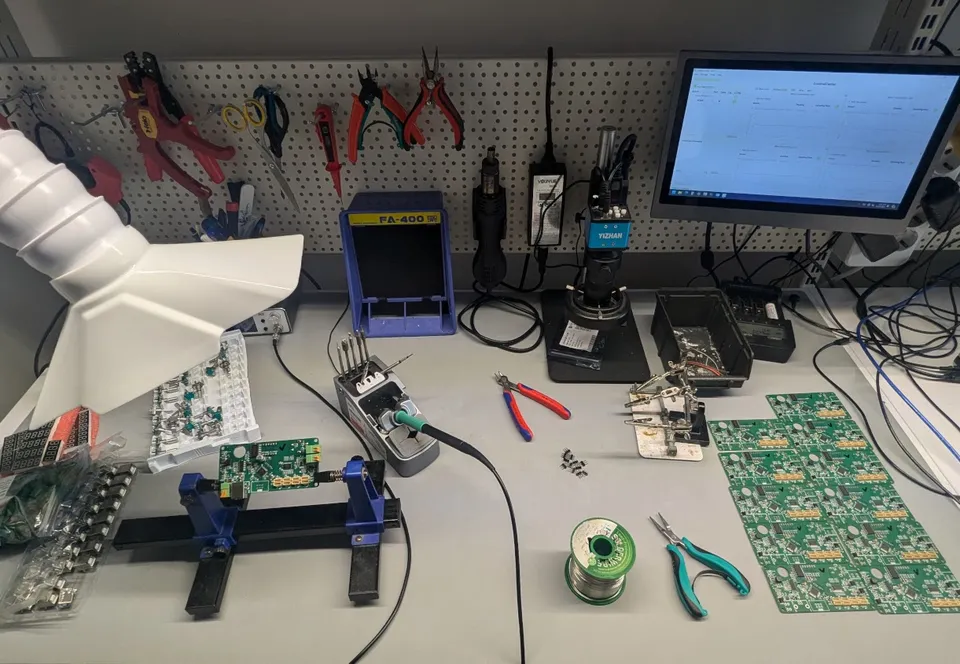
Where through-hole parts still belong
Surface-mount parts fill most of a modern board, but some components are only made, or only trusted, with leads through the board. A through-hole joint holds a heavy part mechanically and carries high current without relying on a pad alone. Typical parts are:
In industrial and automotive equipment these parts face vibration, temperature cycling and repeated plugging. A joint that survives that for years is the point of the work.
Power relays and contactor drivers
Mains transformers and large inductors
Bulk electrolytic capacitors and power resistors
Heavy connectors, switches and fuse holders
Mixed technology PCB assembly
Most boards we build combine both techniques: surface-mount logic, power conversion and communication on one side, through-hole terminals, relays and connectors where the cables arrive. Mixed technology PCB assembly is done in a set order, so heat from one stage does not disturb the other, and both are inspected together. The surface-mount side is described under SMT assembly.
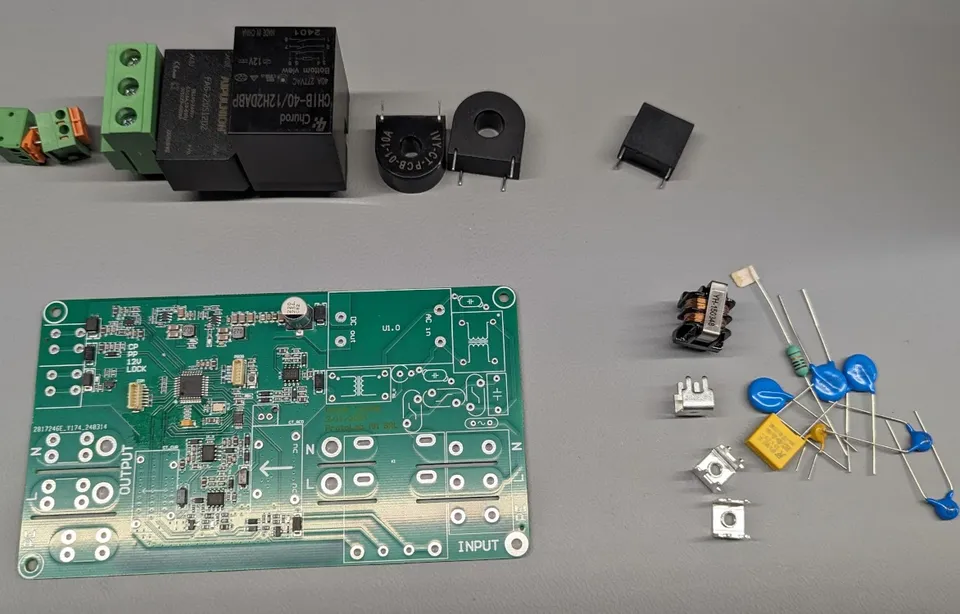
How the boards are built
THT assembly in small quantities rewards care more than speed. Our process:
File review first
We check your BOM, Gerbers and 3D model for hole sizes, spacing, thermal relief on large pads, and clearance between tall parts and the enclosure.
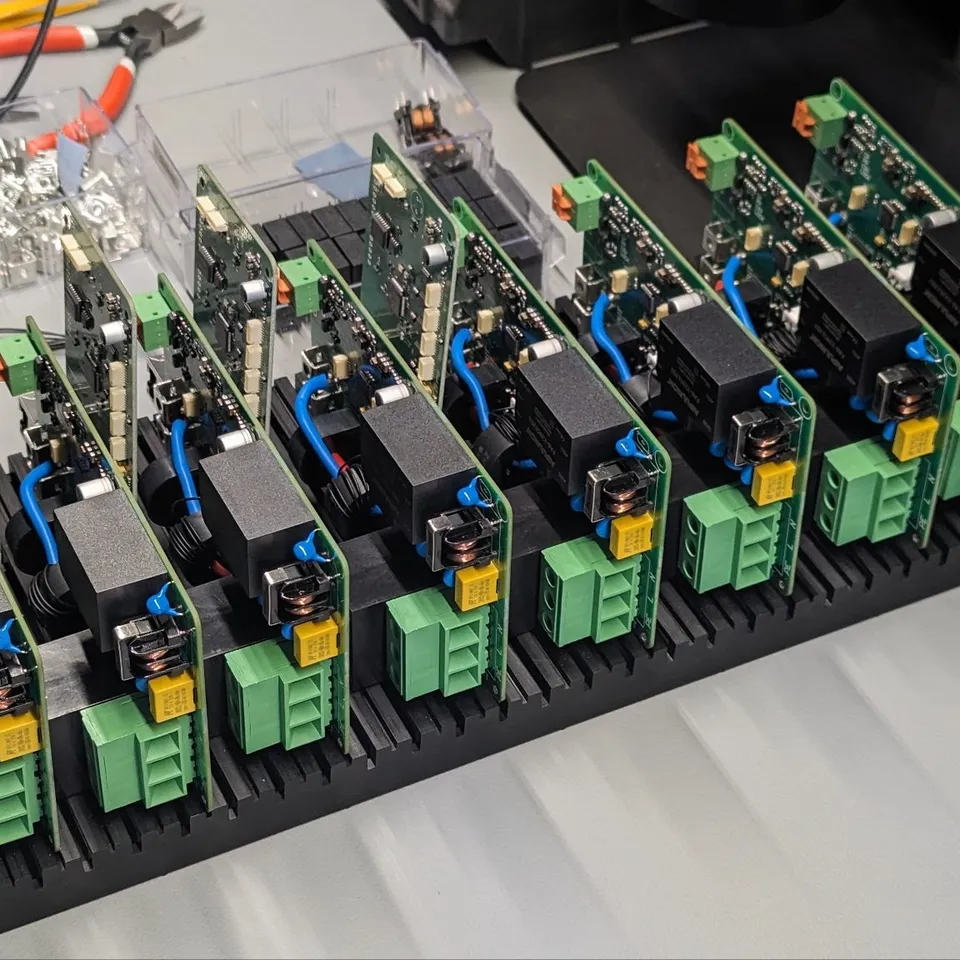
Hand soldering by trained staff,
With jigs that hold the board and parts square for repeated steps across a batch.
Lead trimming and cleaning
To a consistent height and finish.
Partner processes
For wave soldering or conformal coating when the quantity or the environment calls for them.
Checks on every board
Boards that will switch mains or carry high current are worth a full functional test before they go into an enclosure. For products heading to CE marking, the same boards feed our compliance testing checks on creepage, clearance and insulation.
Visual inspection of every joint for wetting, voids, bridges and flux residue
Polarity and orientation of every polarized part
Continuity and short-circuit checks on power paths, with a multimeter or a custom tester
Functional testing to your test procedure, or one we write, on request
What you receive
Assembled, inspected and cleaned boards, labeled by batch
An inspection record listing any rework
Test results, when functional testing is included
Notes on any design change we recommend for the next revision, such as a pad, hole or spacing that made assembly harder than it should be
Boards we build most often
Our through-hole work comes mostly from EV charging and power electronics, industrial control and motor control projects. Many of these boards are our own PCB design, so assembly problems are fixed at the source, and many go on to box build assembly in a DIN-rail or wall-mounted enclosure.