Embedded firmware development
Embedded firmware development at Proto Lab AM is done by the same engineers who design the hardware. The code is written for the board it runs on, tested on that board, and handed over as source you can build, read and maintain. We write firmware for our own designs and for boards designed elsewhere.
What we write
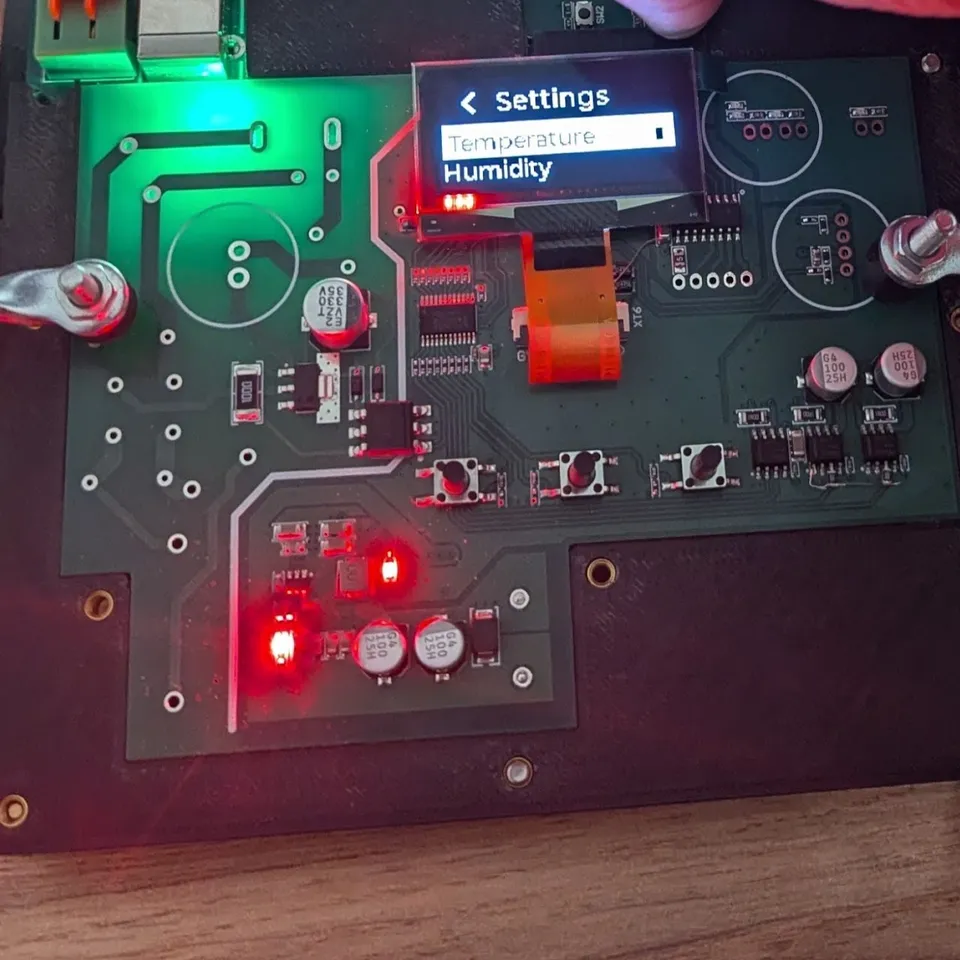
Communication: Modbus RTU and TCP, CAN, RS-485, UART, I2C and SPI, Ethernet, Wi-Fi, MQTT and HTTP
Control logic as explicit state machines, with timing, interlocks and safe states defined in writing
Measurement: ADC sampling, filtering, calibration and scaling to engineering units
Power management: sleep modes and wake-up sources for battery and low-power devices
Fault handling: watchdogs, brown-out behavior, error logging and recovery after a reset
Microcontrollers
Most of our projects run on STM32 or ESP32. STM32 firmware development suits control and measurement work where timing, low power and long availability matter. ESP32 firmware development suits connected devices that need Wi-Fi or Bluetooth on the same chip. We also work with RP2040 and other common families when a design calls for them.
How the work is done
Specification
We list each function, input, output, message and failure case, and agree how each one will be tested.
Bring-up
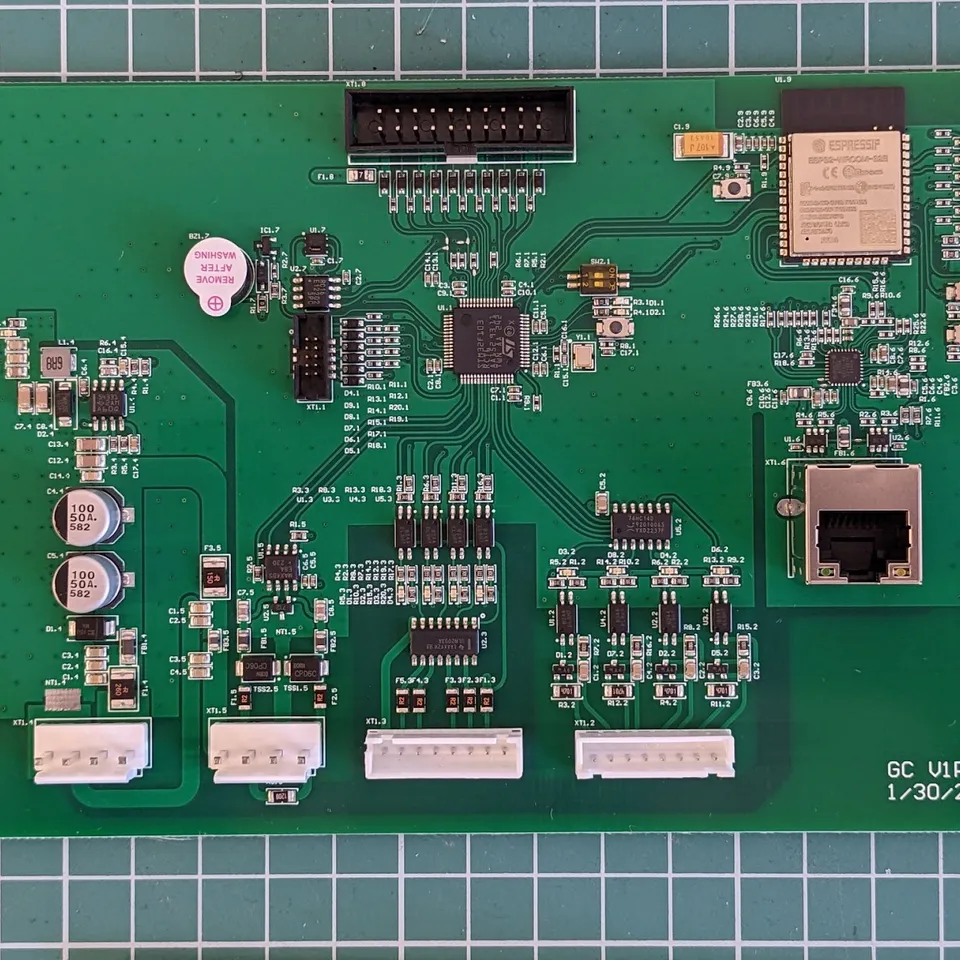
First code on the first board: power, clocks, every peripheral and every interface, checked with the oscilloscope and logic analyzer.
Features
Functions are added in small, testable steps, and each is shown to you on hardware.
Testing
Normal operation, edge cases, power loss and reset, communication errors and bad input. The tests are written down so they can be repeated on every release.
Release
A tagged version, its binary and its release notes.
What you receive
Firmware source code in a version-controlled repository, with build instructions
Compiled binaries and the procedure to program them in production
A description of the architecture, the state machines and the communication protocol
The test list and its results for each release
Embedded software development services for existing products
Not every project starts with a new board. We also take over firmware for products already in the field: we read the existing code, fix faults, add a protocol or a feature, or port it to a microcontroller that can still be bought. These embedded software development services start with a short review, after which you receive a written assessment and a plan.
Firmware and hardware together
Firmware problems are often hardware problems in disguise: a noisy ADC input, a missing pull-up, a reset line that bounces. Because our engineers design both, they find the cause on the board rather than patching it in code. Firmware is usually part of a full electronic device design project, and it is checked again during functional testing.