Custom electronic device design
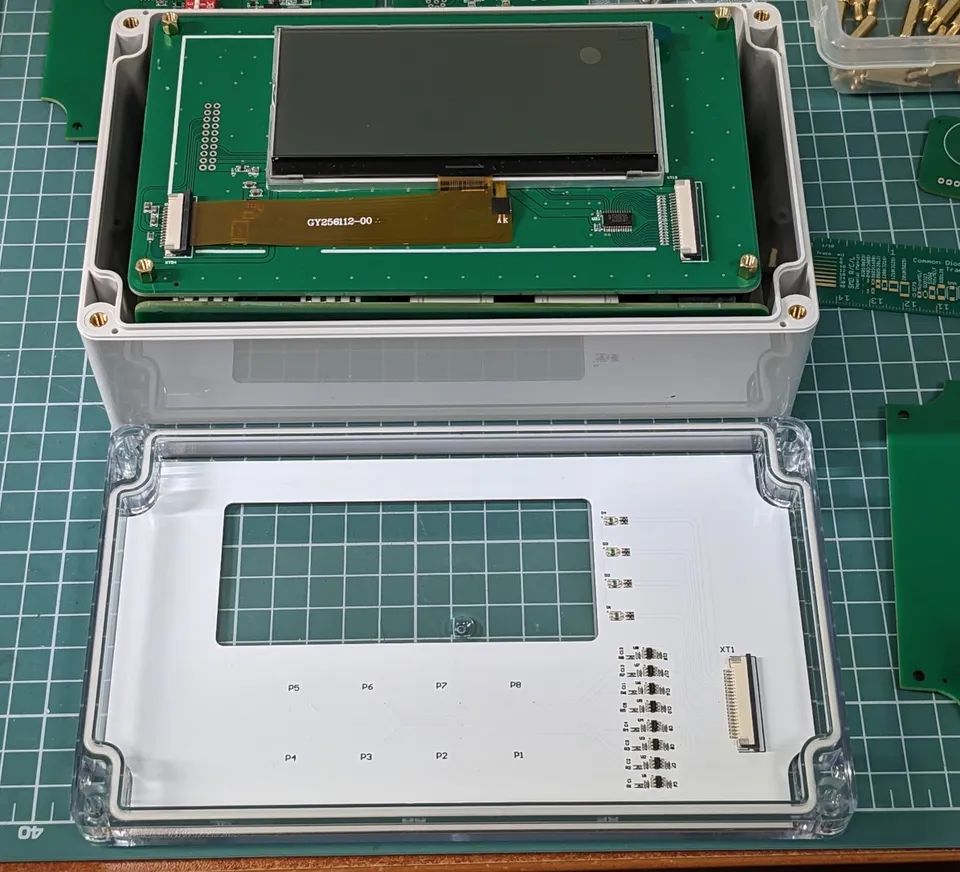
Custom electronic device design at Proto Lab AM covers the whole device: the circuit, the board, the firmware, the enclosure and the tests that prove it works. You bring a requirement, a sketch or an existing product that needs replacing. You leave with working prototypes and a complete set of files to manufacture from.
What the service covers
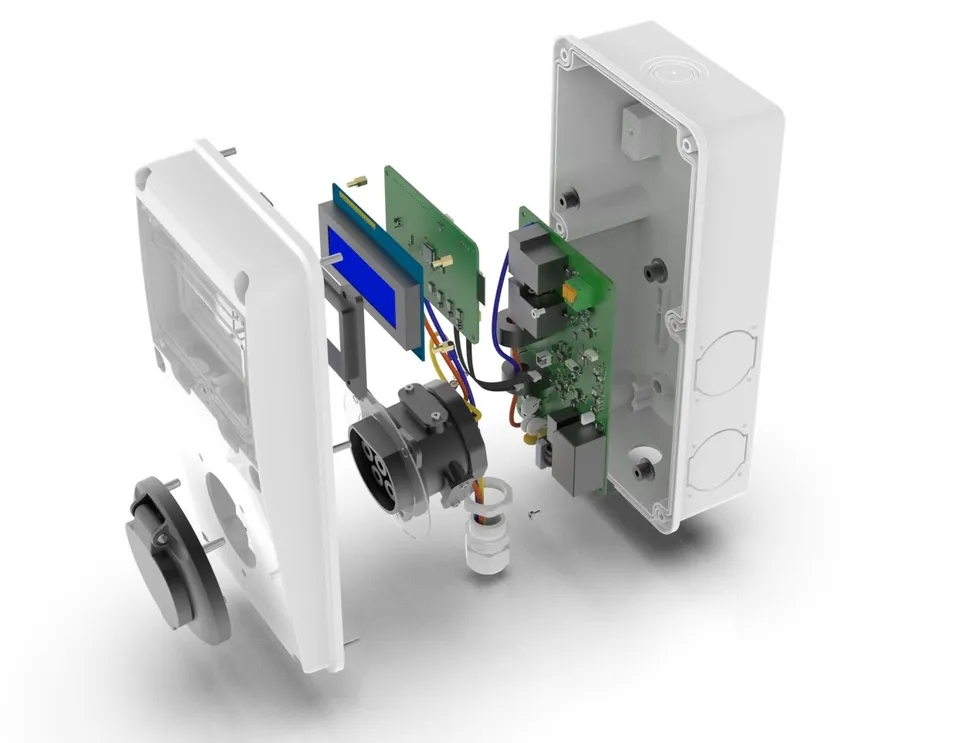
One team handles each discipline, so the board, the software and the housing are designed to fit each other rather than adjusted afterwards.
Our embedded hardware design is aimed at devices of low to medium complexity that work in demanding places: electrical cabinets, charge points, machines and remote sites.
Component selection with availability and lifetime in mind
Schematic and PCB design
Embedded firmware
For the chosen microcontroller. Read more
Interfaces such as RS-485, CAN, Ethernet, Wi-Fi, LoRa and cellular
Enclosure design
And mechanical fit. Read more
Prototype build, bring-up and functional validation
The stages, and what you receive at each
Every stage closes with a result you can review. You decide whether the next stage starts.
Requirements
We go through the use cases, the operating environment, the electrical and communication constraints, the user interface and the standards that apply. You receive a written specification.
Architecture
We choose the main components, the power design and the interfaces. You receive a block diagram, a system description and a component plan with costs and availability.
Hardware design
Schematic capture, power and signal planning, and a layout checked for manufacture. You receive the schematic, the layout and 3D views for review.
Firmware
Drivers, communication stacks, control logic, power-saving modes and fault handling. You receive the source code and compiled binaries.
Enclosure
A housing that holds the board, exposes the controls and suits the mounting: DIN rail, panel, wall or handheld. You receive the 3D model and a printed sample fitted with the board.
Prototype and validation
We assemble the first units and test power-up, every input and output, the interfaces and the user interface logic, with pre-compliance checks for safety and EMC. You receive working prototypes and a test report.
Handover
You receive the full design source and a manufacturing package.
Deliverables
Documentation is written in English. We can also prepare it in Romanian or Russian.
Specification, block diagram and system description
Schematic and PCB layout source files, plus Gerber and drill files
Bill of materials with sourcing options
Firmware source code and compiled binaries
Enclosure files in STEP and STL
Assembled and tested prototypes, with test results
On request, documents to prepare for compliance testing
Who uses our electronic product design services
Our clients are product companies, funded startups, OEMs and integrators. Most need one of three things:
A working prototype for testing or a pilot installation
A realistic technical scope for a device they have not built before
A design that moves straight into small-batch production without being redrawn
Typical devices
Energy and EV charging
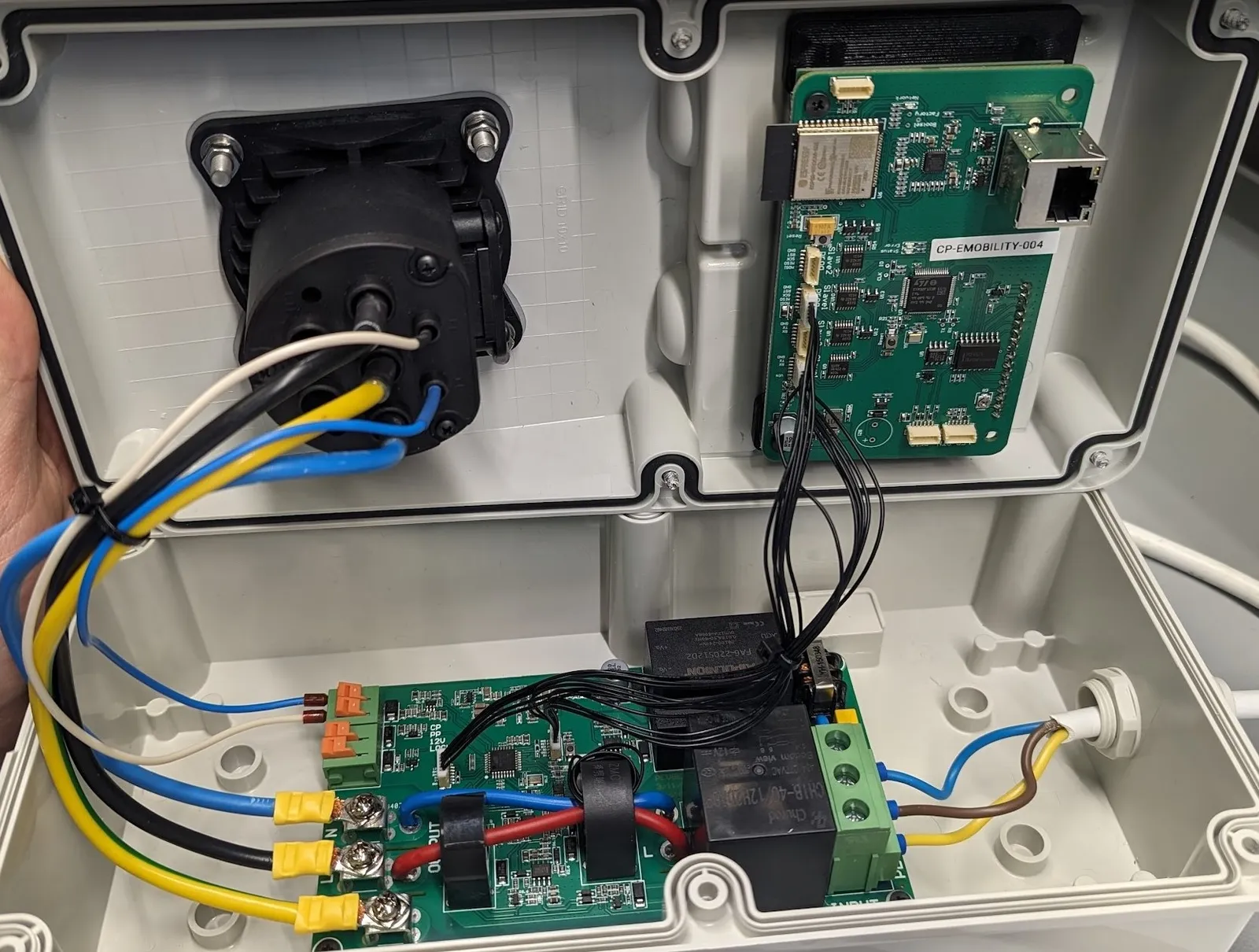
Charger controller boards, relay logic for AC switching, metering and load control. See EV charging and power electronics.
Industrial automation
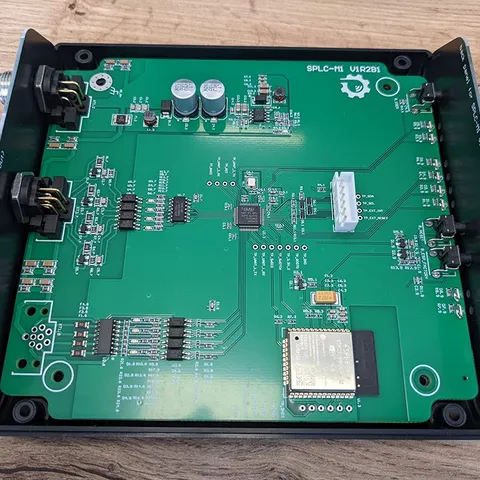
Custom PLCs, DIN-rail control units, and Modbus or CAN field devices. See industrial control.
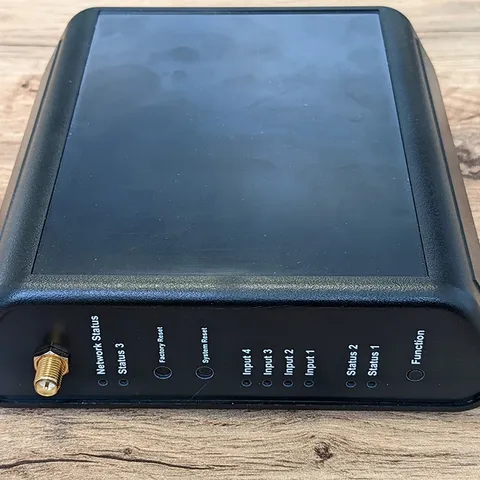
Connected devices
Telemetry modules for vending machines, remote sensor gateways and GPS data loggers. See vending and IoT telemetry.
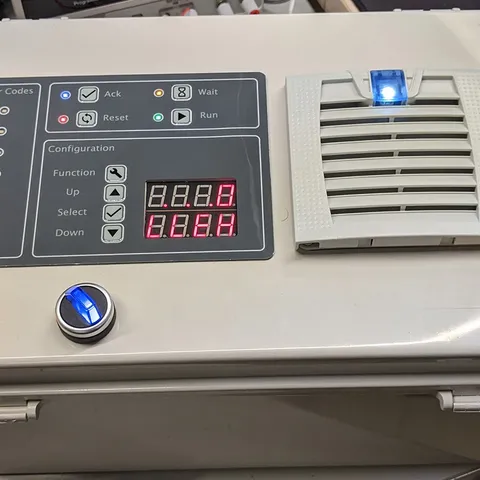
Interfaces and instruments
Operator panels with displays, sensor hubs with analog front ends, and test and diagnostic tools.
Hardware product development without a gap
The common failure in hardware product development is the hand-off: a circuit designed without the enclosure in mind, firmware written for a board that later changes, a prototype that cannot be built in volume. Because one team owns every stage here, those decisions are made together and checked on real hardware before release.
When the prototypes pass, they can be assembled in quantity through our SMT assembly service, either in our workshop or at a partner factory.