SMT prototype assembly and small batch production

Our SMT prototype assembly turns your first boards into working hardware, with an engineer checking every board. Prototypes and pilot units are assembled in our Chisinau workshop. Larger runs go to partner factories, with the production files prepared and the results checked by our engineers, so you deal with one team from the first board to the last.

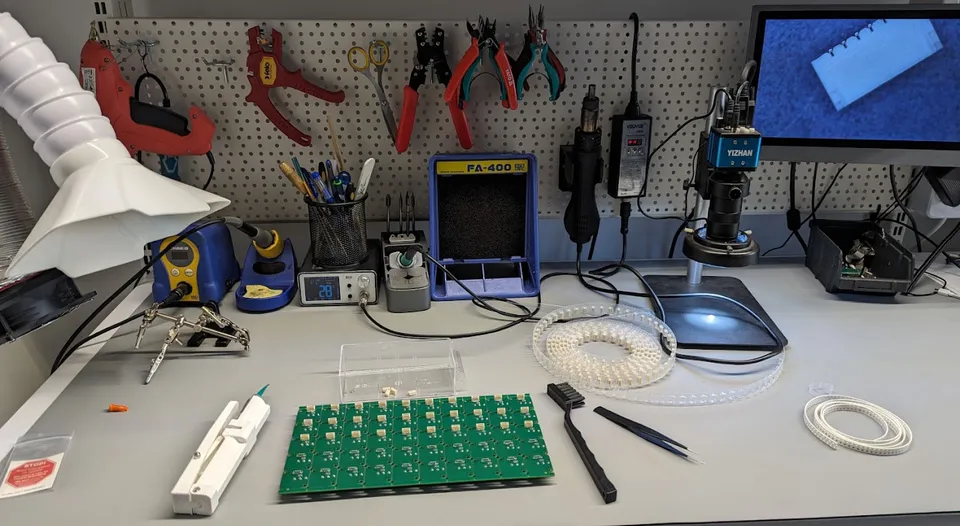
SMT assembly bench with a panel of prototype boards, inspection microscope and soldering station

Two ways to build, one point of contact

Surface-mount assembly suits almost every modern board: parts are smaller, density is higher and the layout you prototype is the layout you will produce. What changes with quantity is where the boards are built.

Prototypes and pilot units in our workshop

The first boards of a new design need an engineer's attention more than a machine's speed. In our workshop we handle:

  • passive components down to 0402;
  • fine-pitch ICs and resistor or capacitor arrays;
  • boards that mix surface-mount and through-hole parts;
  • solder paste applied by stencil or by hand, depending on the board;
  • rework, part changes and modifications between revisions.

Because the boards stay with us, a wrong footprint or a swapped part is found and corrected before the next board is built, and the correction goes back into the design files.

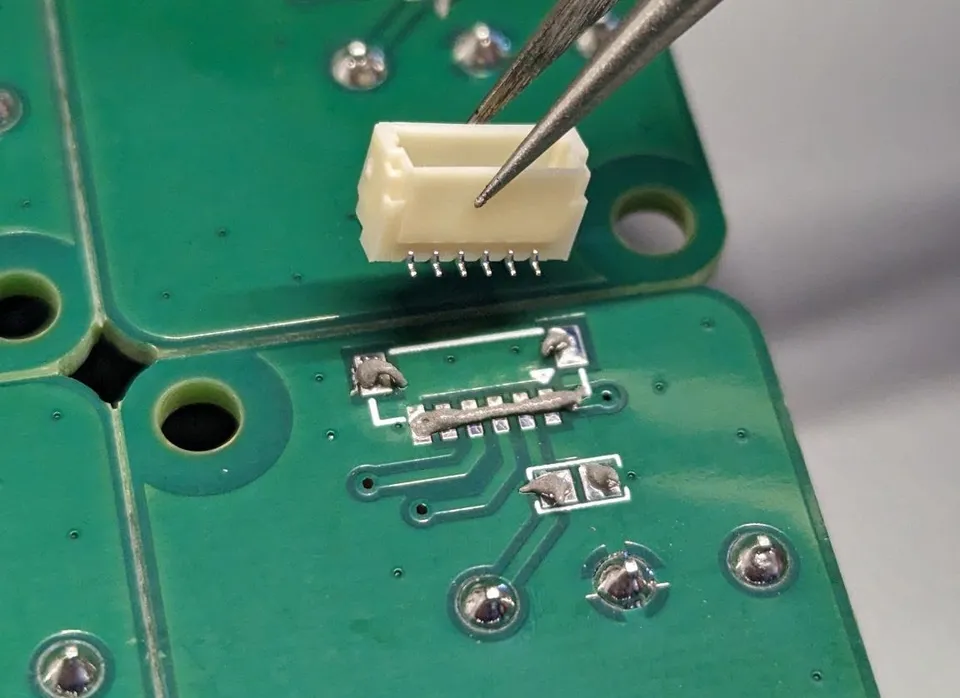
Placing a surface-mount connector on a prototype board with tweezers

Larger runs at partner factories

Once the design is proven, typically from about 50 boards, low volume PCB assembly moves to partner factories in the EU and China with automated placement and reflow. We prepare everything the factory needs and stay responsible for the result:

  • pick-and-place data and assembly drawings;
  • paste stencil data;
  • a bill of materials with approved alternatives;
  • checks of the first articles before the full run starts;
  • inspection and functional testing of the delivered units.
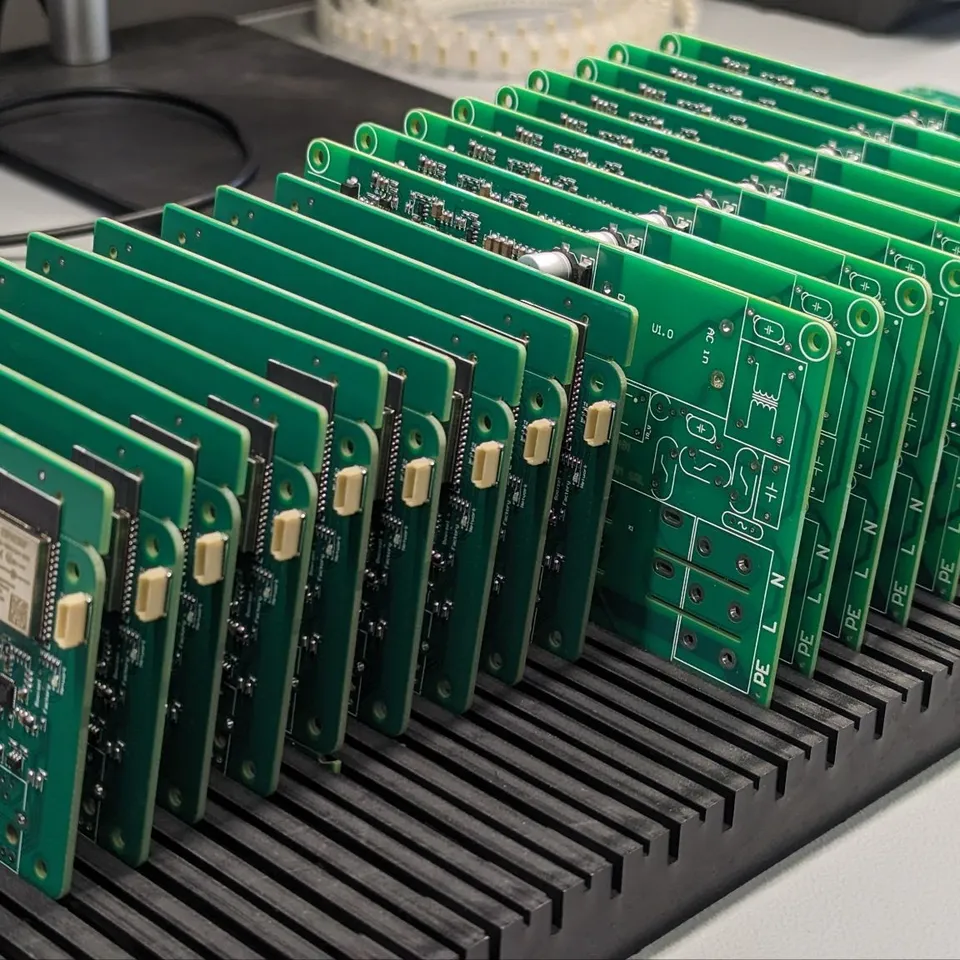
A batch of assembled boards standing in a rack after soldering

Why small batch SMT assembly needs design attention

A pilot run is where hidden problems show: a footprint that works by hand but not on a placement machine, a part that is suddenly out of stock, a connector that blocks the enclosure lid. Because we usually designed the board, or reviewed it before assembly, these are caught before parts are bought. When you bring a board designed elsewhere, we review the Gerbers, BOM and 3D model first and tell you what we would change.

Placing a surface-mount connector on a prototype board with tweezers

Inspection on every board

Every board is checked before it leaves us, whatever the quantity:

For boards that will go into the field, we recommend adding functional testing, so every unit is proven to work and not only to be soldered correctly.

Visual inspection for alignment, solder bridges, polarity and missing parts

Continuity and short-circuit checks on power rails

Power-up and current draw on the first units of each batch

Rework of any fault found, recorded against the board

What you receive

Assembled and inspected boards, labeled by serial or batch

An inspection record, with any rework noted

For partner-built runs: the production files, the first-article report and the test results

Updated design files if a correction was made during assembly

A batch of assembled boards standing in a rack after soldering