
Electronics prototyping services
Our electronics prototyping services answer the risky technical questions in a product before money is spent on custom boards and enclosures. We build the critical part of the circuit from development kits, modules and test circuits, measure how it behaves, and tell you in writing whether the idea works and what the real design needs.
When this stage is worth it
Laying out a PCB around an assumption that later proves wrong costs a board revision, sometimes two. A short proof-of-concept stage is worth it when a project depends on something that has not been measured yet:
A power stage, relay or MOSFET switching a real load
A communication link over RS-485, LoRa, Wi-Fi or cellular in the actual environment
Timing or response that the firmware must meet
A display or user interface that people need to try before it is designed in
What we build and measure
Analog circuits
Op-amp stages, filters, dividers and references, signal scaling for ADC inputs, and comparators with hysteresis. We measure gain, noise and stability against the specification.
Power and switching
MOSFET and relay switching, converters and supply rails under load. We record current draw, ripple, transient response and temperature.
Interfaces and communication
Sensors, displays and radio or wired modules connected and exercised with real data, so protocol problems appear now rather than after layout.
Proof-of-concept firmware
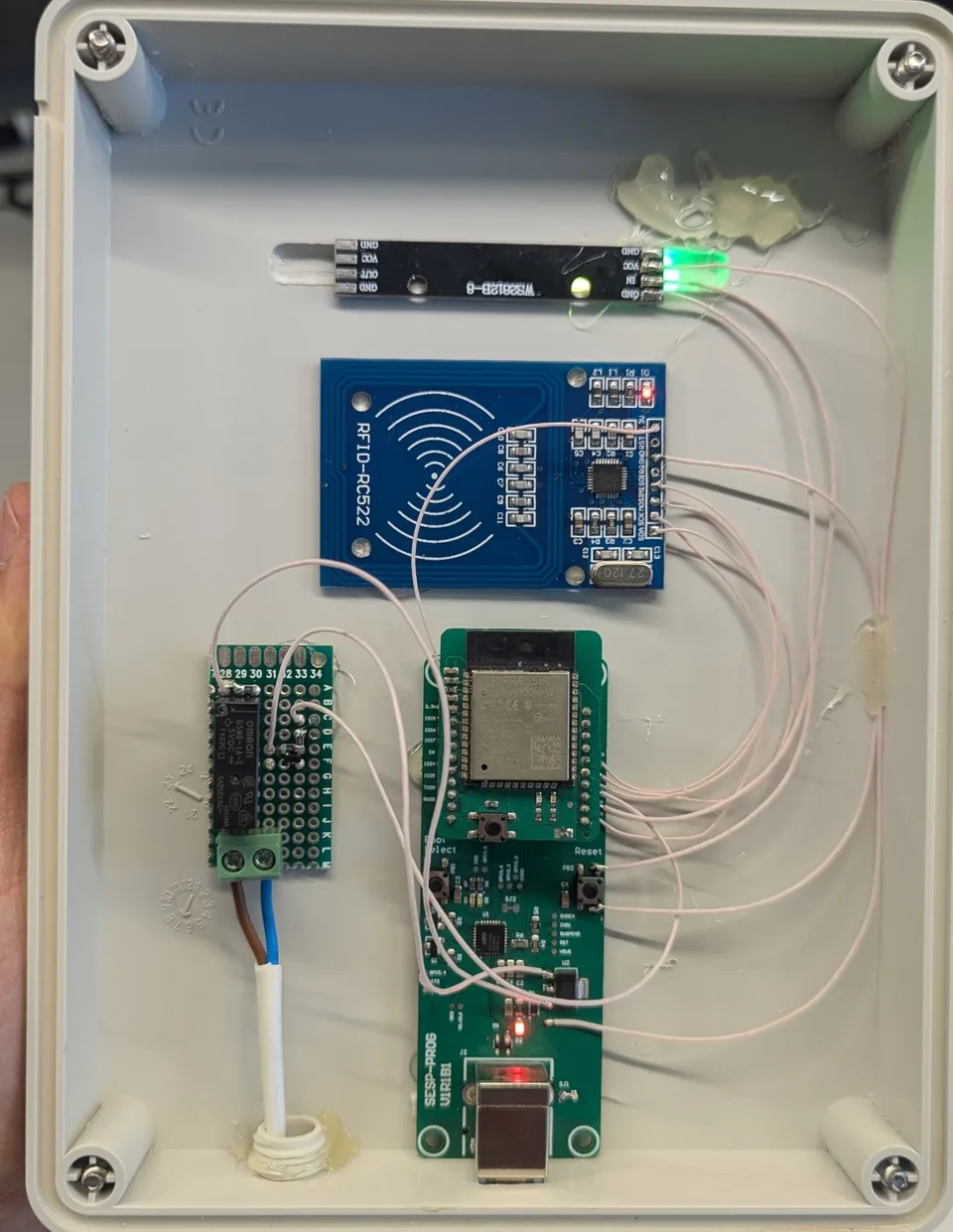
Enough code to read the sensors, drive the outputs, run the control sequence and log results, on STM32, ESP32, Arduino or RP2040 boards.
Proof of concept hardware, not a toy
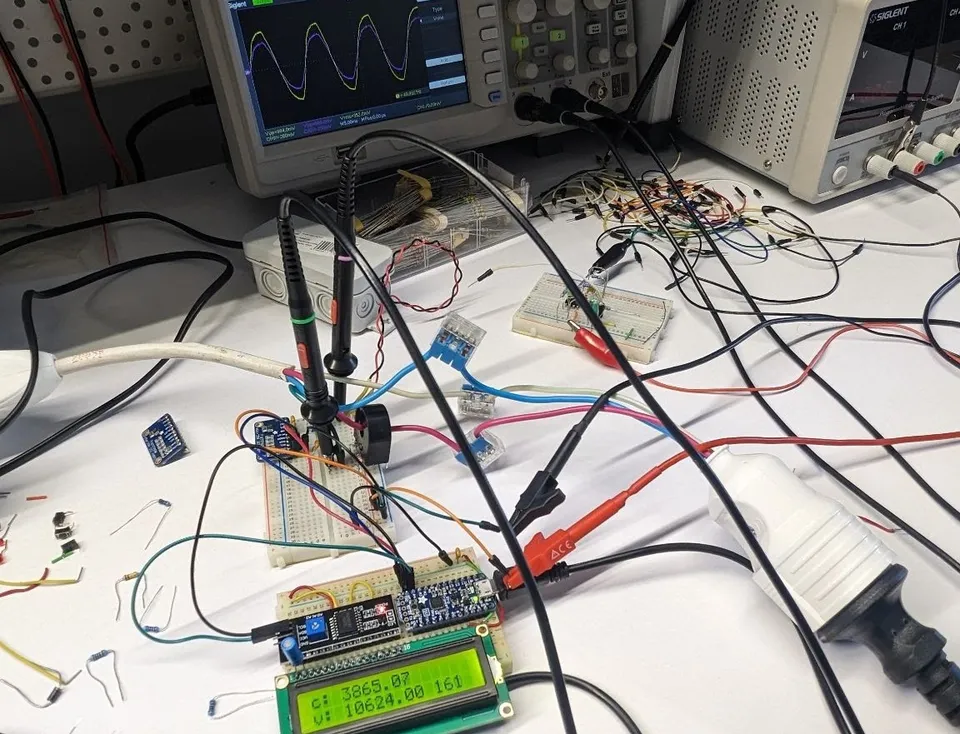
Proof of concept hardware is built to answer a question, so we design each build around the measurement it must make. Test circuits use the components intended for the final design where possible, and results are measured with oscilloscopes, logic analyzers, bench supplies and multimeters, not estimated.
What you receive
When the question is whether a whole product can be built to a target, the same work becomes a hardware feasibility study: the report then also covers the architecture, the main components and the risks that remain.
A short report: what was tested, how, the measured results and what they mean for the design
Circuit diagrams of every configuration that was tried
Photographs of the test set-ups
The firmware used in the tests
Recommendations for the custom circuit, and a list of components or behaviors that carry risk
Typical questions we answer
Does this current sensor stay accurate across the temperature range of an EV charger?
Can this driver start the motor smoothly under load? See motor control
How much power does a telemetry module draw between transmissions? See vending and IoT telemetry
Is the signal from this industrial input clean enough without extra filtering?
From prototype to product
If the results are good, electronic prototype development continues directly into electronic device design: schematic, PCB design, firmware and enclosure, built on what has been measured. The test rigs often become the first version of the functional testing set-up.
How long it takes
A proof-of-concept stage is kept short on purpose. We agree the questions it must answer and the measurements that will settle them before any parts are ordered, so the stage ends when those answers are in, not when the budget runs out. If a result is negative, you learn it at the cost of a few modules and some bench time, and the report explains what would have to change.